
Introduction
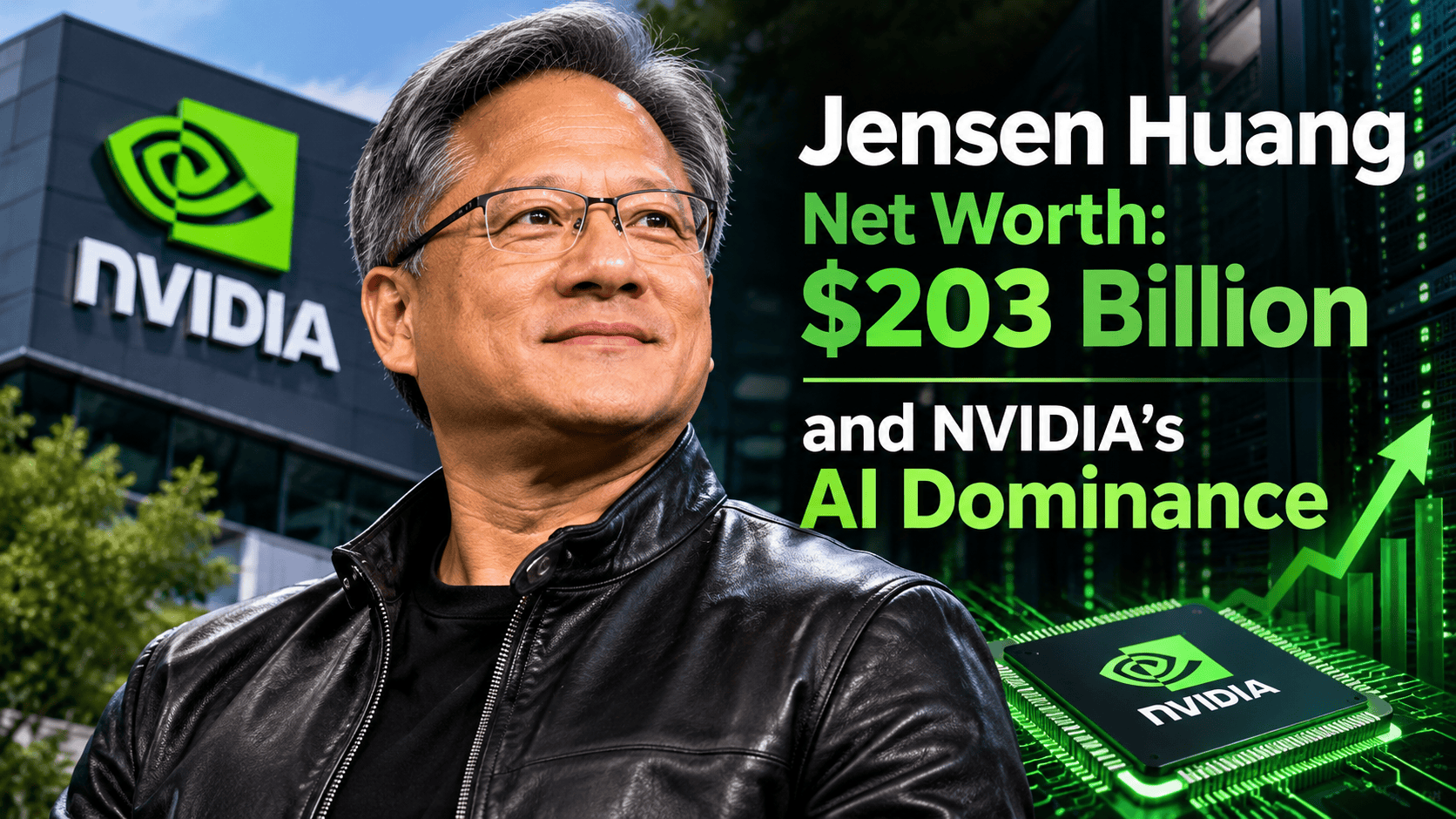
Jensen Huang, co-founder and CEO of NVIDIA, has seen his net worth cross the $200 billion mark for the first time, cementing his place among the world’s wealthiest individuals. As of early October 2026, Forbes estimated his net worth at approximately $203.2 billion, making him the seventh-richest person globally. The milestone came as NVIDIA shares hit a fresh all-time high above $237, driven by sustained demand for the company’s AI chips and a record $150 billion buyback announcement.
Huang’s fortune is almost entirely tied to his stake in NVIDIA, the chipmaker he co-founded in 1993 and has led for over three decades. His journey from a Taiwanese-born immigrant who once worked as a waiter at Denny’s to one of the most influential figures in technology is a story of vision, timing, and the explosive growth of artificial intelligence. This article breaks down Jensen Huang net worth in detail—how it grew, what it consists of, and what it means for investors and observers of the AI economy.
How Jensen Huang Built His Fortune
The Founding of NVIDIA
He co-founded NVIDIA in 1993 alongside Chris Malachowsky and Curtis Priem. The company initially focused on graphics processing units (GPUs) for gaming and visual computing. Huang, who holds a master’s degree in electrical engineering from Stanford University, became the company’s CEO and has held the position ever since—one of the longest CEO tenures in Silicon Valley history.
The AI Pivot
NVIDIA’s transformation into the world’s most valuable publicly traded company was not an overnight success. The company’s GPUs, originally designed for rendering video game graphics, turned out to be exceptionally well-suited for the parallel processing required by artificial intelligence and machine learning workloads. This pivot, which accelerated in the 2010s, positioned it at the center of the AI revolution.
By 2026, its market capitalization stood at approximately $5.7 trillion, making it the most valuable company in the world. The company’s revenue for fiscal 2026 reached $215.9 billion, a 65% year-over-year increase.
Jensen Huang’s NVIDIA Ownership Stake
How Many Shares Does He Own?
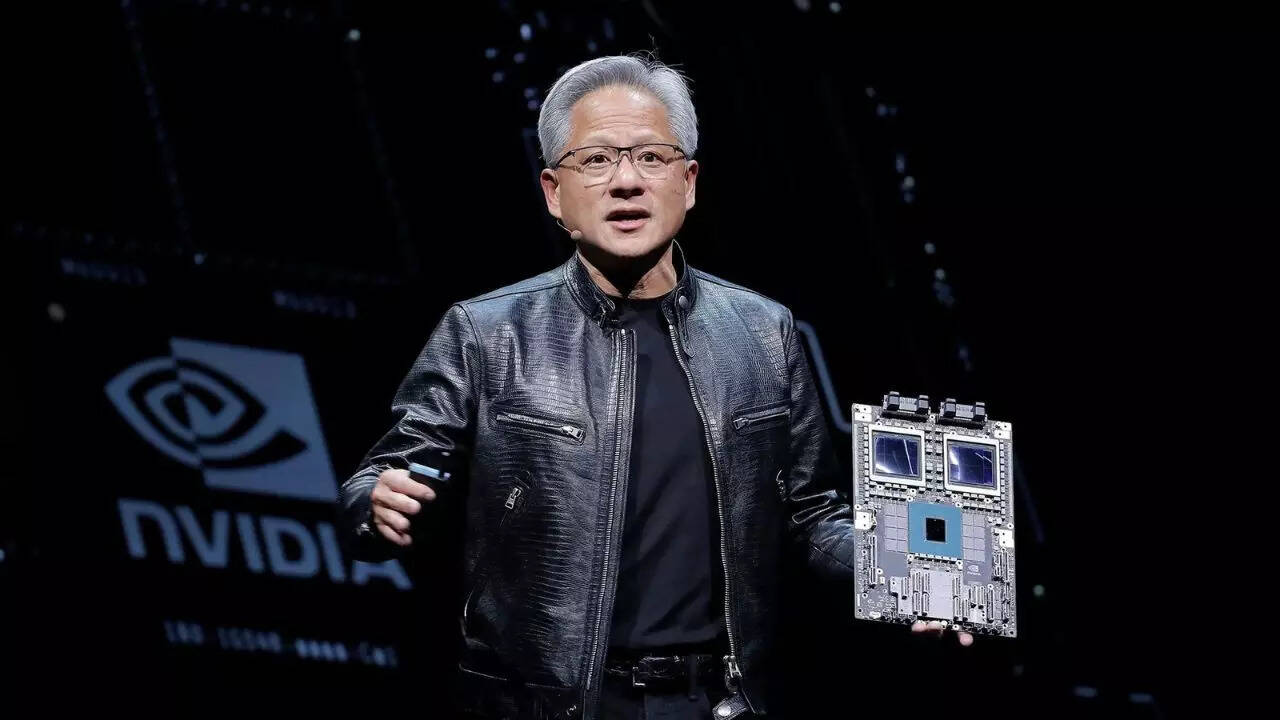
Huang’s wealth is overwhelmingly concentrated in NVIDIA stock. According to NVIDIA’s 2026 proxy statement, he owned approximately 870 million shares, representing 3.58% of the company, as of March 23, 2026. At an early October 2026 share price of around $231, those shares were worth approximately $201 billion.
| Ownership Metric | Detail |
|---|---|
| Shares owned | ~870 million |
| Ownership percentage | 3.58% |
| Value of stake (Oct 2026) | ~$201 billion |
| Largest institutional shareholder | BlackRock (7.43%) |
| Second-largest institutional shareholder | Vanguard (7.31%) |
A Note on His Ownership Percentage
Huang’s 3.58% stake is notably smaller than the ownership stakes of other tech billionaires in their own companies. Elon Musk, Mark Zuckerberg, and Jeff Bezos each hold significantly larger percentages of their respective firms. Huang’s relatively modest ownership share reflects the dilution that occurred over NVIDIA’s multiple stock splits and decades of public trading.
In 1999, before NVIDIA’s first stock split, Huang owned 2.9 million shares—a 9.9% stake in the company. Had he retained all those shares through subsequent splits, he would hold nearly 2.8 billion shares today. His current 3.58% stake indicates he has sold portions of his holdings over the years.
Institutional Investors
While Huang is the largest known individual shareholder, institutional investors hold substantially larger positions. BlackRock owns 7.43% of NVIDIA, and Vanguard Capital Management owns 7.31%. These institutional holdings mean that despite his role as founder and CEO, Huang does not control a majority of the company’s voting power.
Jensen Huang’s Annual Compensation
Fiscal 2026 Pay Package
Huang’s annual compensation, while substantial, represents a tiny fraction of his total wealth. In fiscal 2026 (ended January 25, 2026), his total compensation was $36.3 million, a 27% decrease from the prior year.
| Compensation Component | FY2026 | FY2025 |
|---|---|---|
| Base salary | $1.5 million | $1.5 million |
| Non-equity incentive plan | $6.0 million | $6.0 million |
| Stock awards | $24.8 million | $38.8 million |
| Other compensation | ~$4 million | ~$3.6 million |
| Total | $36.3 million | $49.9 million |
The decline in total compensation was almost entirely driven by a 36% reduction in the value of stock awards, reflecting the moderation in NVIDIA’s share price growth after explosive gains in 2023 and 2024.
How His Compensation Compares
Huang’s compensation is modest compared to some of his peers. Sundar Pichai of Google received a potential pay package valued at up to $692 million over three years, and Apple’s Tim Cook earned $74.3 million in 2025. Huang’s relatively low cash compensation—he has famously taken a $1 salary at times in NVIDIA’s history—reflects his ownership-based approach to wealth creation.
A Timeline of Jensen Huang Net Worth Growth
Huang’s net worth has grown exponentially over the past several years, tracking NVIDIA’s rise as an AI powerhouse.
| Date | Estimated Net Worth | Source | Notes |
|---|---|---|---|
| 2022 | $20.6 billion | Forbes 400 | Pre-AI boom |
| March 2023 | ~$15 billion (¥150B) | Hurun Global Rich List | Ranked 63rd globally |
| November 2023 | $40.7 billion | Forbes 400 | Ranked 17th in U.S. |
| May 2024 | >$100 billion | Bloomberg | First time crossing $100B |
| October 2024 | $109 billion | Bloomberg | Ranked 13th globally; surpassed Intel’s market cap |
| July 2025 | $144 billion | Bloomberg | Ranked 9th globally |
| September 2025 | $151 billion | Forbes 400 | Ranked 8th in U.S. |
| February 2026 | $151 billion | Bloomberg | Ranked 11th globally |
| October 2026 | $203.2 billion | Forbes | Ranked 7th globally |
Sources: Bloomberg Billionaires Index, Forbes, Hurun Report
The most dramatic growth occurred between 2023 and 2024, when NVIDIA’s stock tripled and then more than doubled as AI demand surged. From a net worth of roughly $20 billion in 2022, Huang’s fortune multiplied tenfold in just four years.
Real Estate and Personal Assets
Beyond his NVIDIA stock, Huang has accumulated a real estate portfolio valued at approximately $53 million. His properties include:
| Property | Location | Purchase Price | Year |
|---|---|---|---|
| Gold Coast mansion | San Francisco, CA | $38 million | 2017 |
| Los Altos Hills home | Silicon Valley, CA | $6.9 million | 2003 |
| Maui residence | Wailea, Hawaii | $7.5 million | 2004 |
| Starter home (sold) | San Jose, CA | $185,000 | 1988 (sold) |
Sources: Realtor.com, SFGate, Morningstar
The San Francisco Gold Coast mansion, spanning over 11,000 square feet, is the most valuable property in his portfolio. It features a wine cellar, a theater, and views of the Golden Gate Bridge. His primary residence remains the Los Altos Hills home, which he purchased in 2003 and where he lives with his wife, Lori.
Huang’s real estate holdings, while impressive, represent less than 0.03% of his total net worth. His wealth is overwhelmingly concentrated in NVIDIA equity.
Philanthropy and Giving
Jensen and his wife, Lori, have made significant philanthropic contributions, with a particular focus on education and disaster relief.
Vanderbilt University Donation
In July 2026, the Huangs pledged $75 million to Vanderbilt University to fund an arts, architecture, and design college at its new San Francisco campus, scheduled to open in 2027. The donation reflects Huang’s belief that technology and the arts must evolve together. “Technology and art together shape civilization,” he said at the announcement.
Nepal Flood Relief
In September 2026, Huang made the largest individual donation on record for Nepal’s flood victims, contributing $10 million to the state emergency fund. The donation was praised by Nepali officials as “unprecedented support.”
Education Donations
Huang has also donated tens of millions of dollars to his alma maters, Oregon State University and Stanford University. His giving has consistently emphasized the intersection of technology, design, and human development.
Key Facts About Jensen Huang
| Category | Detail |
|---|---|
| Full name | Jen-Hsun “Jensen” Huang |
| Born | February 17, 1963, Tainan, Taiwan |
| Age (2026) | 63 |
| Education | Oregon State University (BS), Stanford University (MS) |
| Role | Co-founder, President, and CEO of NVIDIA |
| Net worth (Oct 2026) | ~$203.2 billion |
| Global wealth rank | 7th (Forbes) |
| NVIDIA ownership | ~3.58% (870 million shares) |
| Spouse | Lori Huang |
| Children | Spencer Huang, Madison Huang |
| Philanthropic focus | Education, arts, disaster relief |
| Signature style | Black leather jackets |
Expert Insights: What Huang’s Wealth Signals About the AI Economy
Concentration Risk and the AI Bet
Huang’s fortune is a pure-play bet on artificial intelligence. Unlike billionaires with diversified portfolios spanning multiple industries, his wealth is tied almost entirely to NVIDIA’s continued dominance in AI chips. This concentration has produced extraordinary gains—but it also exposes him to significant downside risk if AI investment slows or competitors gain ground.
The Founder-CEO Advantage
Huang’s long tenure as CEO—over 30 years—is nearly unprecedented in the technology sector. This continuity has allowed him to pursue a consistent long-term vision, particularly the pivot toward AI that began well before the current boom. His relatively modest 3.58% ownership stake means his interests are aligned with shareholders but not controlling—a structure that has attracted institutional investment.
The Broader AI Wealth Effect
Huang’s wealth trajectory mirrors the broader AI investment cycle. The $200 billion milestone in October 2026 reflects not just NVIDIA’s performance but also market confidence in the AI infrastructure buildout. As NVIDIA approaches the $6 trillion market cap threshold, Huang’s net worth will likely continue to fluctuate with the company’s valuation.
Read More: Christine Quinn’s Business Empire: RealOpen, Real Estate & Net Worth
Frequently Asked Questions
How did Jensen Huang make his money?
Jensen Huang made his fortune primarily through his ownership stake in NVIDIA, the company he co-founded in 1993. His wealth is tied to NVIDIA’s stock performance, which surged as the company became the dominant supplier of AI chips.
How much of NVIDIA does Jensen Huang own?
As of March 2026, Huang owned approximately 870 million shares, representing about 3.58% of NVIDIA. This makes him the largest known individual shareholder, though institutional investors like BlackRock and Vanguard hold larger stakes.
What is Jensen Huang’s salary?
Huang’s total compensation for fiscal 2026 was $36.3 million, including a $1.5 million base salary, $6 million in non-equity incentives, and $24.8 million in stock awards.
Has Jensen Huang’s net worth crossed $200 billion?
Yes. In October 2026, Forbes estimated his net worth at approximately $203.2 billion, making him the seventh-richest person in the world at that time.
Where does Jensen Huang live?
Huang’s primary residence is in Los Altos Hills, California, near NVIDIA’s headquarters. He also owns a mansion in San Francisco’s Gold Coast neighborhood and a home in Maui, Hawaii.
What is Jensen Huang’s net worth compared to other tech billionaires?
Huang’s net worth of over $200 billion places him among the top 10 wealthiest individuals globally. He ranks behind Elon Musk, Jeff Bezos, Mark Zuckerberg, and Larry Ellison, but ahead of most other technology founders.
Conclusion
Jensen Huang net worth has reached unprecedented heights, surpassing $200 billion in October 2026 as NVIDIA solidified its position as the world’s most valuable company. His fortune is a testament to the transformative power of the AI economy—and to a founder who bet on a vision decades before it became mainstream.
What sets Huang apart is not just the magnitude of his wealth, but its concentration. Unlike billionaires with diversified empires, his net worth rises and falls with a single company’s stock. This concentration has been the source of extraordinary gains, but it also underscores the volatility inherent in the AI sector. For investors and industry observers, Huang’s wealth trajectory offers a real-time barometer of AI market sentiment. As NVIDIA continues to push the boundaries of computing, his fortune will remain one of the most closely watched indicators of where the technology economy is headed.