Introduction
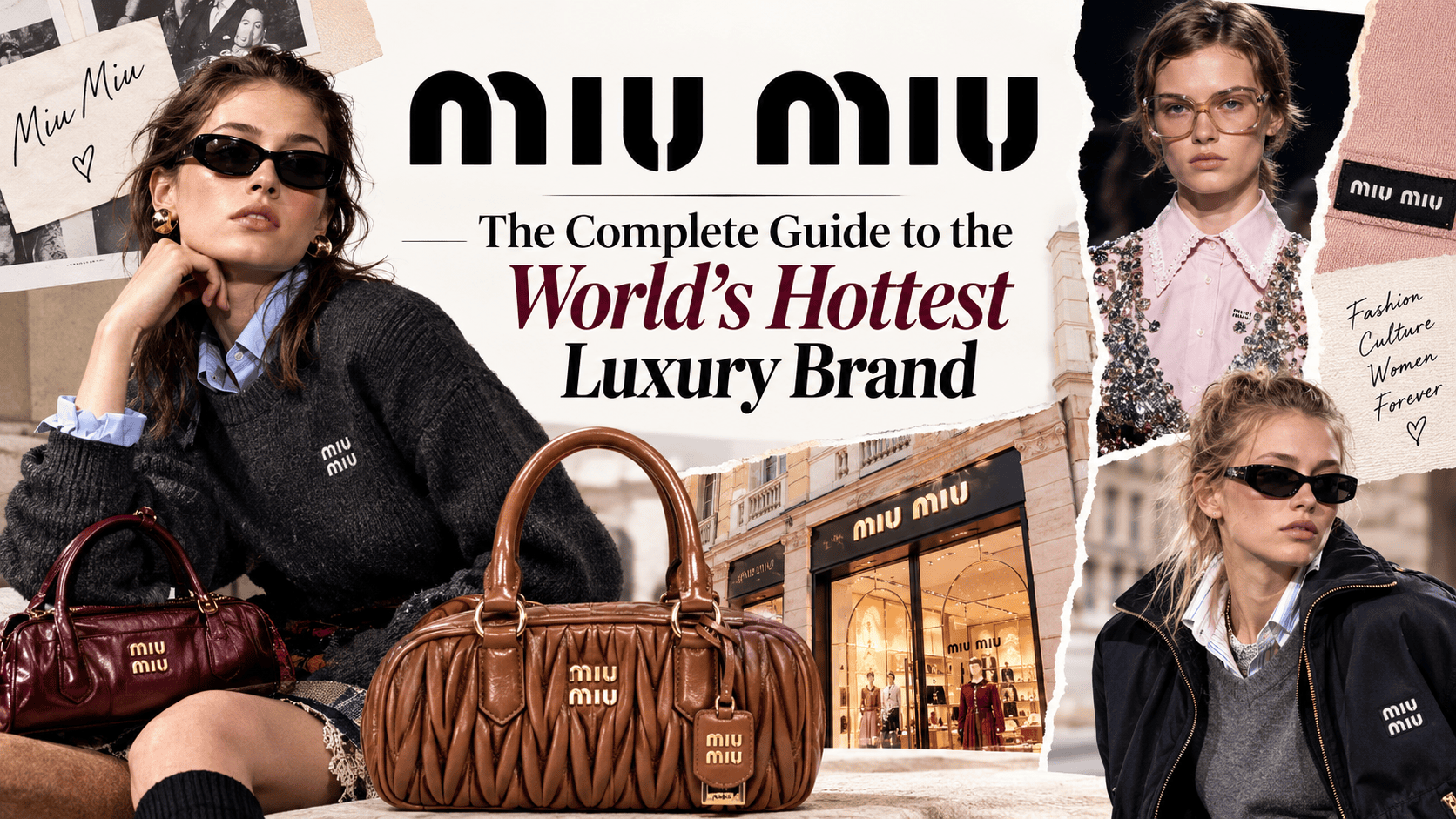
Miu Miu is the Italian luxury fashion brand that transformed from Prada’s rebellious younger sister into the hottest label in global fashion. Founded in 1993 by Miuccia Prada, Miu Miu has achieved what few luxury brands manage: sustained cultural relevance, explosive commercial growth, and a distinctive identity that resonates with younger consumers without alienating the fashion establishment. The brand’s rise is remarkable not just for its scale but for its timing—it grew while many of its competitors struggled.
Understanding Miu Miu requires looking beyond the products. It is a case study in how a sub-brand can evolve into a standalone cultural force, how “ugly chic” can become aspirational, and how a designer’s personal vision can translate into commercial triumph. This guide covers the brand’s history, its most important products, its market strategy, and the challenges it now faces.
Key Facts at a Glance
| Attribute | Details |
|---|---|
| Founded | 1993 by Miuccia Prada |
| Parent Company | Prada Group (fully owned subsidiary) |
| Headquarters | Milan, Italy |
| Name Origin | Miuccia Prada’s family nickname |
| Positioning | Youth-oriented luxury, experimental, playful |
| 2025 Retail Sales | €1.6 billion (approx.) |
| Lyst Ranking | Top 3 hottest brand for multiple consecutive years |
| Key Categories | Ready-to-wear, handbags, footwear, accessories |
| Signature Aesthetic | Subversive femininity, micro-minis, ballet flats, Y2K influences |
The Origins: From Prada’s Sister to Standalone Brand
Miu Miu was established in 1992–1993 by Miuccia Prada, granddaughter of Prada founder Mario Prada. The name came from Miuccia’s family nickname, a detail that underscores the brand’s personal, instinctive nature. Initially positioned as an accessories-rich “anti-fashion” line to complement Prada, it was never intended to be a conventional diffusion label.
The brand’s first collection featured cowgirl-themed fringed suede jackets and patchwork prairie skirts—an early indication of the playful, slightly irreverent aesthetic that would define it. By 2006, it had been progressively repositioned as a standalone entity, with its show location moved from Milan to Paris to emphasise its independence from Prada.
Miuccia Prada has described the creative process behind Miu Miu as fundamentally different from Prada. “When I am working on Miu Miu, it has to come immediately, instinctively, spontaneously,” she told Women’s Wear Daily. “If I think three times, I stop. Anything avant-garde, twisted, or challenging becomes part of my Miu Miu vision”.
Timeline: Key Milestones in Miu Miu’s Evolution
| Year | Milestone |
|---|---|
| 1992 | Miu Miu established by Miuccia Prada |
| 1993 | First collection shown at New York Fashion Week |
| 1990s | Kate Moss opens debut show; Chloë Sevigny becomes brand muse |
| 2006 | Show relocated to Paris; repositioned as standalone brand |
| 2010s | Expansion into accessories; viral product moments begin |
| 2022 | SS22 micro-mini skirt becomes defining fashion moment; tops Lyst Index |
| 2023–2025 | Sustained high growth; named Lyst’s hottest brand multiple years |
| 2025 | Retail sales reach approximately €1.6 billion |
| 2026 | Growth normalises from extraordinary highs; Upcycled 2026 launches |
What Defines the Miu Miu Aesthetic?
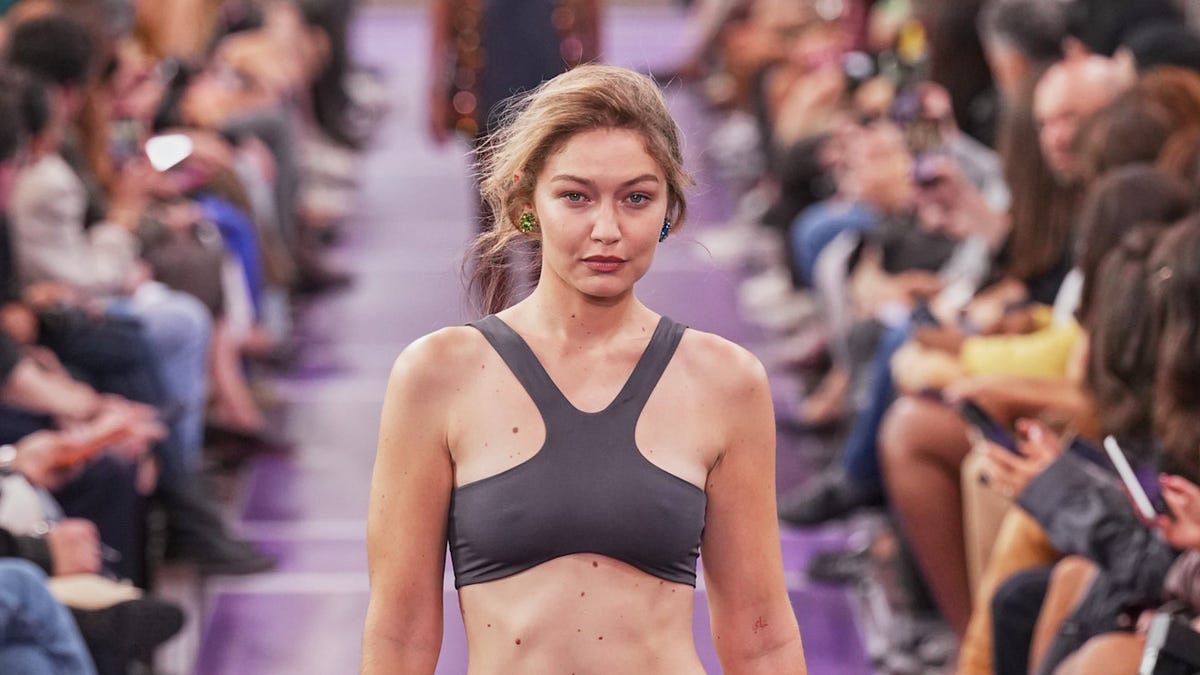
Miu Miu’s visual identity is built on contradictions. It is feminine but not delicate, youthful but not naive, luxurious but deliberately unpolished. The brand has been called the “master of the look of not-quite-right,” a phrase that captures its appeal to women who reject conventional polish.
The “Ugly Chic” Philosophy
Miuccia Prada’s approach to design has consistently challenged traditional notions of beauty. The SS22 collection, featuring micro-miniskirts with raw, seemingly scissor-slashed hems, became the defining fashion moment of 2022 and catapulted it to the top of the Lyst Index. This was not accidental provocation—it was a deliberate strategy of creating items that provoke both desire and debate.
Youth and Rebellion
While Prada is associated with a more urban, minimalist aesthetic, it is positioned as the more personal, experimental counterpart. As one analysis notes, “Compared to the urban, minimalist Prada, Miu Miu is like a girl with a strong personality, where ‘being yourself’ is the only guideline”. The brand appeals to 20-somethings who can “get away with wearing cerise patent leather platforms with carved-wood soles to work”.
The “Rich Heiress” Persona
In markets like China, Miu Miu has cultivated a distinctive persona: the rebellious yet refined “富家千金” (rich heiress). This archetype—a young woman of wealth who dresses for herself rather than for others—has proven exceptionally resonant with Gen Z consumers.
Miu Miu vs. Prada: What’s the Difference?
| Dimension | Prada | Miu Miu |
|---|---|---|
| Founded | 1913 | 1993 |
| Aesthetic | Urban, minimalist, intellectually severe | Playful, experimental, subversive |
| Target Consumer | Established luxury buyer, professional | Younger, trend-conscious, fashion-forward |
| Price Positioning | Higher | Slightly more accessible |
| Design Philosophy | Considered, heritage-driven | Instinctive, spontaneous, “if I think three times, I stop” |
| Cultural Role | Institutional authority | Cultural provocateur |
The distinction between the two brands is more than marketing. Miuccia Prada approaches each line with a different creative mindset. Prada represents her more considered, architectural side; Miu Miu is where her most instinctive, avant-garde impulses find expression.
Iconic Products and Price Points
Miu Miu’s product strategy blends accessible entry points with high-ticket statement pieces. This “laddered pricing” approach has been central to its commercial success, allowing younger consumers to enter the brand while still capturing significant spend from established clients.
Handbags
| Model | Approximate Retail Price | Notes |
|---|---|---|
| Wander | €2,000–€5,800 | Matelassé leather shoulder bag; highly collectible |
| Arcadie | €2,600–€3,700 | Top-handle silhouette; iconic matelassé craftsmanship |
| Vivant | Varies by material | Soft leather; featured in FW26 campaign |
| Rendez-vous | Varies by size | Soft leather construction |
The Wander bag has become a particular object of desire, with resale prices occasionally exceeding retail. The Arcadie, introduced more recently, has established itself as a modern icon with its distinctive top-handle silhouette and matelassé texture.
Footwear
Miu Miu’s footwear strategy has generated some of its most viral moments. The satin ballet pumps, launched in 2022, triggered a global “balletcore” trend and an ongoing arms race among high-street retailers to produce similar styles. The brand’s collaboration with New Balance has produced the 530 SL sneaker, retailing at approximately $1,220–$1,270 per pair, which has become a fixture in both fashion and sneaker culture.
Ready-to-Wear and Accessories
The brand’s clothing ranges from approximately €200 for small accessories to over €4,200 for outerwear and statement pieces. Miu Miu has also produced deliberately provocative items—most notably £750 silk briefs designed to be worn without trousers, which generated extensive media coverage and reinforced the brand’s reputation for subversive luxury.
The Business of Miu Miu: Growth and Market Performance
Miu Miu’s recent financial performance is among the most remarkable stories in luxury fashion. From €347 million in net sales in 2021, the brand grew to approximately €1.6 billion in 2025—a compound annual growth rate of 46% over four years. In 2024, retail sales grew by 93%, nearly doubling profits and positioning it as the standout performer in a luxury sector facing significant headwinds.
Growth Trajectory
| Period | Retail Sales Growth | Context |
|---|---|---|
| 2021 | Baseline (€347M) | Pre-acceleration |
| 2022 | Strong growth | SS22 micro-mini moment |
| 2023 | Continued acceleration | Ballet flat trend |
| 2024 | +93% | Peak growth year |
| H1 2025 | +49% (Q1), +40% (Q2) | Sustained momentum |
| Q1 2026 | +2.4% | Normalisation from extraordinary highs |
The slowdown in early 2026 was widely anticipated. Morgan Stanley analysts predicted a 3% decline in Q3 2026 retail sales, citing the “challenging comparison base” of 60% growth in the same period the previous year. This normalisation reflects the mathematical reality of growing from a small base—not a collapse in brand desirability.
The Lyst Index
Miu Miu has been a fixture at the top of the Lyst Index, the definitive ranking of the world’s hottest fashion brands. The brand was named “hottest brand in the world” for multiple consecutive years, with search demand growing 138% since 2022.
Miu Miu’s Marketing and Cultural Strategy
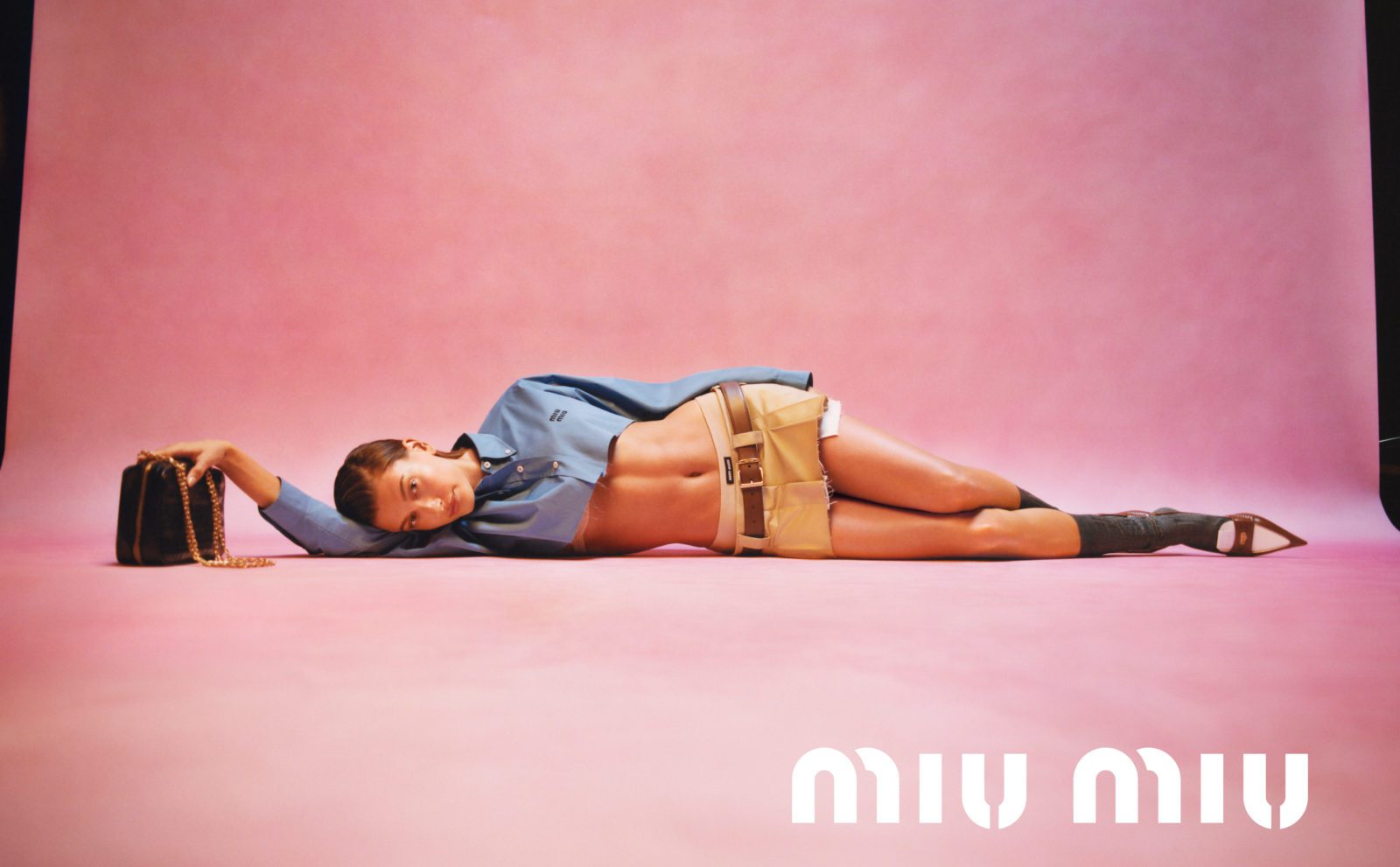
Miu Miu’s success is not solely product-driven. The brand has developed a sophisticated cultural strategy that leverages celebrity, digital engagement, and strategic partnerships.
Campaign Strategy
The Fall/Winter 2026 campaign, shot by Zoe Ghertner and featuring Hailey Bieber and Xiao Wen Ju, exemplifies the brand’s approach: cinematic, atmospheric, and focused on mood rather than product specification. The campaign presents “femininity as fluid and self-authored, shifting between vulnerability and control”.
Collaborations
The ongoing partnership with New Balance has been particularly successful, producing sneakers that appeal to both fashion and athletic footwear audiences. The collaboration expanded in 2025–2026 with tennis champion Coco Gauff, who wears a signature model reinterpreted by the two brands.
Digital and Viral Strategy
Miu Miu’s knack for creating “It” items that generate organic social media engagement is a core competitive advantage. The micro-mini skirt, for instance, spawned its own Instagram account dedicated to documenting sightings. The brand’s products are “the most liked luxury item on Vinted,” indicating strong secondary market engagement.
The Miu Miu Upcycled Initiative
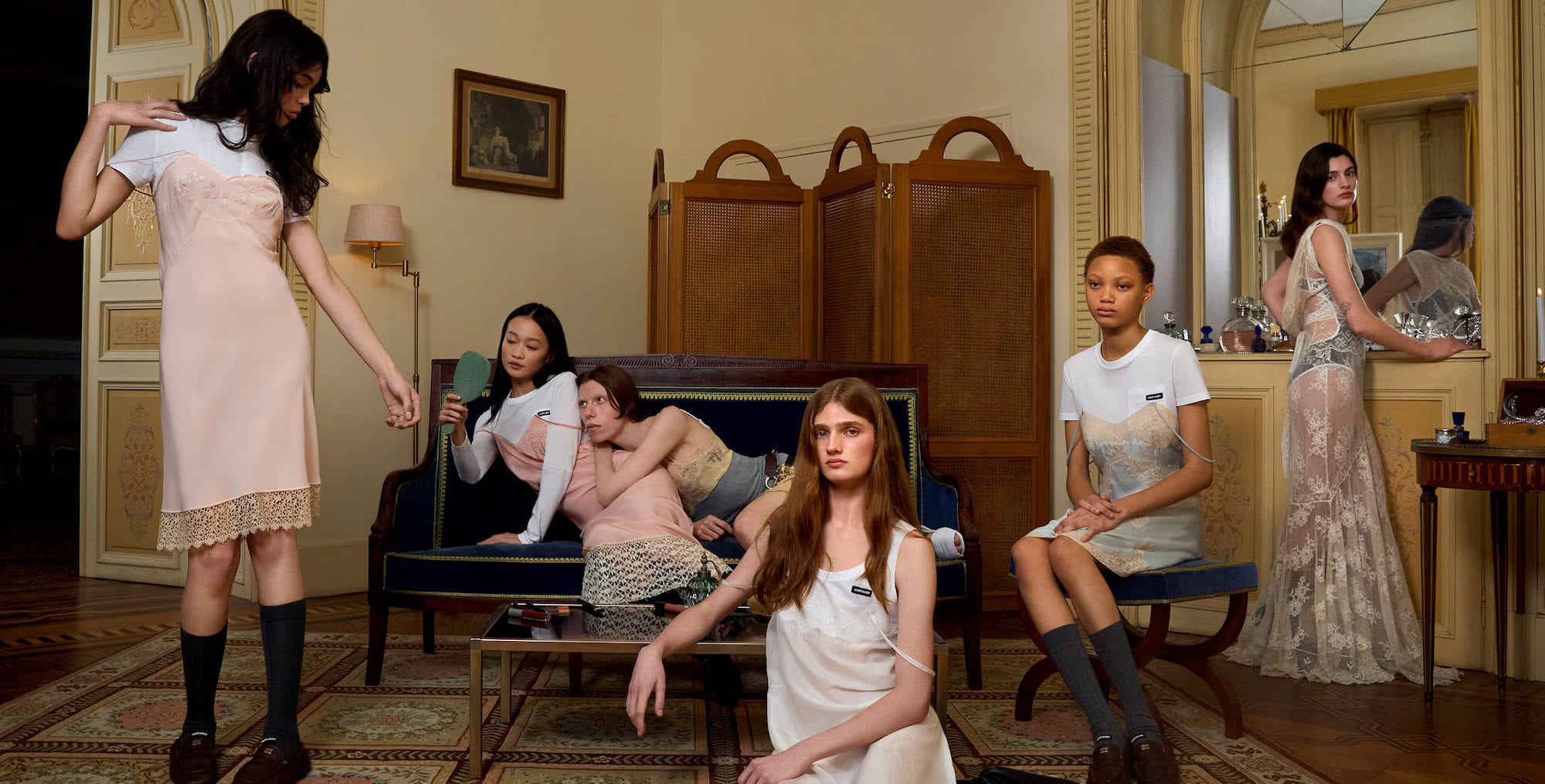
In 2026, Miu Miu launched “Upcycled,” a collection built around the concept of extending the life of existing garments. The collection began with a classic white cotton shirt and khaki cotton canvas chinos, reimagining them through a dialogue between past and present. Announced at the Miu Miu flagship in Ginza, Tokyo, and available globally from May 2026, Upcycled represents the brand’s engagement with sustainability—not as a marketing exercise, but as a creative constraint.
The initiative aligns with Miuccia Prada’s broader design philosophy: working with what is available, spontaneously, without overthinking. It also positions Miu Miu favourably with younger consumers who prioritise environmental responsibility alongside aesthetic innovation.
Expert Insights: Why Miu Miu Works
Cultural Timing
Miu Miu’s rise coincided with a broader cultural shift away from the polished, “quiet luxury” aesthetic toward something more expressive and personal. While other brands doubled down on heritage and restraint, Miu Miu offered permission to be playful, imperfect, and deliberately “off.”
The Power of the Sub-Brand
Miu Miu demonstrates that a sub-brand can outperform its parent when given creative freedom and a distinct identity. The brand was never forced to serve as a “diffusion line” in the traditional sense; it was allowed to develop its own voice from the beginning.
Pricing Strategy
The brand’s “laddered” pricing—with entry points in accessories and footwear that are accessible relative to the brand’s prestige—allows it to capture a wide demographic. A consumer might begin with a pair of ballet flats and graduate to a matelassé handbag. This strategy has been particularly effective in China, where the brand has segmented the market by persona rather than price alone.
The Challenge of Normalisation
The deceleration in growth from 2026 onwards is not a crisis but a normalisation. Miu Miu cannot grow at 50% annually forever. The question is whether it can transition from a high-growth disruptor to a sustainable, consistently profitable luxury house. The early signs—continued product innovation, strong brand equity, and expansion into new categories—suggest it can.
What’s Next for Miu Miu?
The brand’s forward trajectory depends on several factors. Continued product innovation is essential; Miu Miu cannot rely indefinitely on the micro-mini skirt and ballet flat. The Upcycled initiative and the expansion of the New Balance collaboration demonstrate ongoing creative energy.
Geographic expansion remains a priority. While the brand has performed strongly in Europe, the Middle East, and China, opportunities in the Americas and other markets remain. The Prada Group’s acquisition of Versace adds another dimension—Miu Miu’s role within a larger conglomerate structure may evolve.
Most importantly, Miu Miu must maintain the intangible quality that made it successful: the sense that it is a brand created by a singular vision, not by committee. As long as Miuccia Prada’s instinctive, spontaneous approach continues to guide the brand, Miu Miu is likely to remain relevant in a way that few luxury labels achieve.
Read More: Kacey Montoya: Award Winning Career, KTLA Departure, and Her Mission With Fix’n Fidos
Frequently Asked Questions
Is Miu Miu owned by Prada?
Yes. Miu Miu is a fully owned subsidiary of the Prada Group. It was founded by Miuccia Prada, who also serves as the creative director of both Miu Miu and Prada.
What is the difference between Miu Miu and Prada?
Prada is the older, more established brand with an urban, minimalist aesthetic. Miu Miu is younger, more experimental, and positioned at a slightly more accessible price point. Miuccia Prada approaches each line with a different creative mindset—Prada is considered and architectural, while Miu Miu is instinctive and spontaneous.
How much does a Miu Miu bag cost?
Miu Miu handbags range from approximately €2,000 for smaller styles to over €5,800 for larger matelassé leather designs. The Wander bag and Arcadie bag are among the most popular models.
Why is Miu Miu so popular?
Miu Miu’s popularity stems from a combination of distinctive design, cultural timing, and strategic product placement. The brand’s willingness to challenge conventional aesthetics—its “ugly chic” philosophy—has generated viral moments that translate into commercial success. Its positioning as a brand for self-expressive, fashion-forward consumers resonates particularly with Gen Z.
What is Miu Miu’s “rich heiress” persona?
In markets like China, Miu Miu has cultivated a persona of the “富家千金” (rich heiress)—a young woman of wealth who dresses for herself rather than for others. This archetype, combined with the brand’s deliberately non-essential luxury items, reinforces the idea that Miu Miu is for those who can afford to be playful with their spending.
Is Miu Miu growing or slowing down?
Miu Miu experienced extraordinary growth from 2022 to 2025, with retail sales reaching approximately €1.6 billion. Growth has normalised in 2026, with Q1 retail sales up 2.4%—a significant deceleration from the 60% growth in the same period the previous year, but expected given the challenging comparison base.
Conclusion
Miu Miu is more than a luxury fashion brand; it is a cultural phenomenon that demonstrates the power of instinctive, personal design in an industry often driven by committee thinking. From its origins as Prada’s rebellious younger sister to its current status as the world’s hottest label, Miu Miu has consistently defied expectations. The brand’s ability to generate viral moments—the micro-mini skirt, the ballet flat, the £750 briefs—has translated into tangible commercial success, with sales growing from €347 million in 2021 to approximately €1.6 billion in 2025.
The normalisation of growth in 2026 is not a warning sign but a natural phase in the brand’s evolution. Miu Miu has established itself as a permanent fixture in the luxury landscape, with a distinct identity, a loyal consumer base, and a creative leader whose instincts remain as sharp as ever. For anyone seeking to understand how a sub-brand becomes a cultural force, Miu Miu offers the definitive case study.