
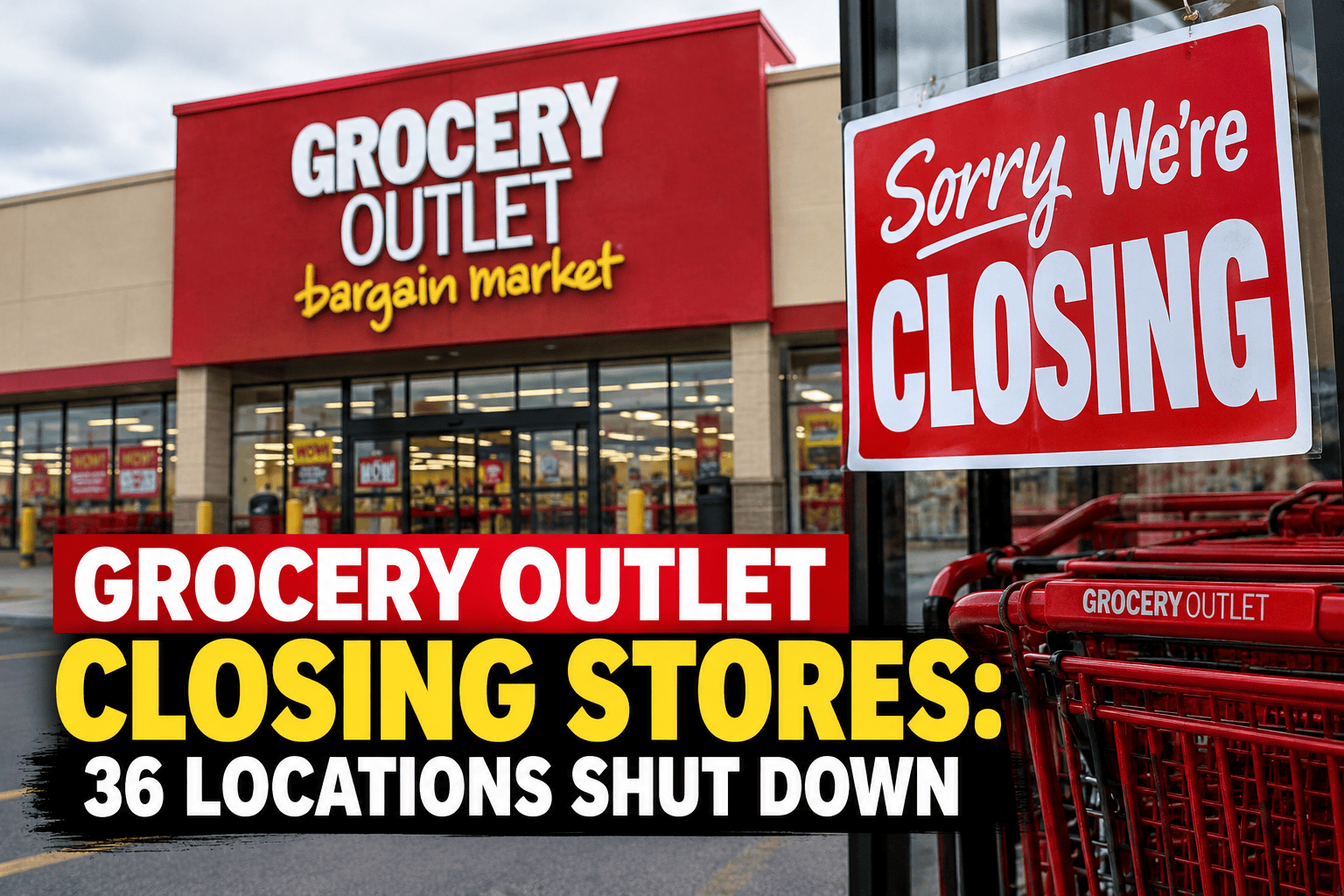
Grocery Outlet closing stores across the United States, with 36 underperforming locations shutting down in 2026 as part of a corporate restructuring plan. The California-based discount grocery chain announced the closures alongside its fourth-quarter and full fiscal year 2025 earnings results, revealing a $225 million net loss and a stock price that plunged nearly 28% in a single day. The closures span six states—California, Idaho, Maryland, New Jersey, Ohio, and Pennsylvania—and represent roughly 6% of the company’s total footprint. For shoppers who rely on Grocery Outlet for discounted groceries, understanding which locations are closing and why is essential for planning where to shop next.
What Happened: The Announcement Explained
On March 4, 2026, Grocery Outlet Holding Corp. (NASDAQ: GO) announced its fourth-quarter and full fiscal year 2025 financial results. Alongside those results, the company unveiled what it calls a “Store Optimization Plan”—a strategic initiative approved by the board to close 36 financially underperforming stores and streamline operations.
The company reported an operating loss of $234.8 million for fiscal 2025, driven largely by impairment charges tied to the store closures. The stock fell $2.45, or 27.9%, to close at $6.34 per share on March 5, 2026, as analysts downgraded the stock following the announcement.
The closures are expected to be substantially completed during fiscal 2026. By the end of the first quarter of fiscal 2026, the company had already completed 27 of the planned closures, and by April 2026, all 36 underperforming stores had been closed.
Timeline of Events
| Date | Event |
|---|---|
| March 4, 2026 | Grocery Outlet announces Q4 and full-year 2025 results alongside the Store Optimization Plan |
| March 5, 2026 | Stock drops 27.9% to $6.34 per share; analysts downgrade |
| March 2026 | Closure list surfaces through real estate listings; local news outlets confirm specific locations |
| April 2026 | All 36 planned closures completed |
| Q2 2026 | Company reports net sales of $1.19 billion, up 1.1%, as new store sales offset closure impact |
Which Grocery Outlet Stores Are Closing?
The closures are concentrated in two regions: the East Coast and California. Of the 36 stores, 24 are on the East Coast and 12 are split between California (9 stores) and Idaho (3 stores).
Full List of Affected States and Store Counts
| State | Number of Closures |
|---|---|
| California | 9 |
| Maryland | 8 |
| New Jersey | 6 |
| Ohio | 6 |
| Pennsylvania | 4 |
| Idaho | 3 |
| Total | 36 |
California Store Closures
The nine California locations slated for closure include stores in Azusa, Brawley, El Cajon, Kerman, La Habra, Ontario, Patterson, Poway, and Ridgecrest.
East Coast Store Closures
On the East Coast, the closures include eight stores in Maryland, six in New Jersey, six in Ohio, and four in Pennsylvania. Specific locations include stores on Chesaco Avenue in Baltimore and Baltimore National Pike in Catonsville, Maryland. In Pennsylvania, affected stores include locations in Kennett Square, Meadville, and Philadelphia.
Why Is Grocery Outlet Closing Stores?
The closures stem from three interconnected factors: overexpansion, changes in federal food assistance programs, and deteriorating financial performance.
1. The Company Expanded Too Quickly
Grocery Outlet President and CEO Jason Potter was direct in his assessment during the investor call: “It’s clear now that we expanded too quickly, and these closures are a direct correction”. The retailer opened 42 new stores in 2025 alone while closing only five, ending the year with 570 stores across 16 states. The rapid expansion, particularly on the East Coast, created a portfolio of underperforming locations that were dragging down overall profitability.
Potter noted that 24 of the closures are on the East Coast, representing 30% of that region’s locations, but emphasized that the remaining 51 East Coast stores are profitable. “We are not fully exiting any state, and we believe we have a meaningful opportunity to grow in the east over the long term,” he said.
2. SNAP Benefit Disruptions Hurt Core Customers
Grocery Outlet’s business model depends heavily on value-conscious shoppers, many of whom rely on the Supplemental Nutrition Assistance Program (SNAP). The company reported double-digit declines in EBT sales during the fourth quarter of 2025, directly linked to delays and disruptions in federal SNAP benefit disbursements.
Potter acknowledged this during the earnings call: “Consumer pressure intensified, federally funded benefits were delayed, and competition grew more promotional in the fourth quarter”. The company also cited changes in Electronic Benefits Transfer distributions that “negatively impacted our SNAP business and affordability”.
3. Financial Performance Deteriorated
The company’s fourth-quarter results were characterized by Potter as “unacceptable,” with “more work to do than we expected”. The $225 million net loss for fiscal 2025, combined with a $110 million non-cash impairment charge on long-lived assets tied to the closures, forced the board to approve the Optimization Plan as a corrective measure.
Financial Impact of the Closures
The Store Optimization Plan is designed to eliminate a $12 million annualized adjusted EBITDA drag by 2027. While the closures represent a painful short-term correction, the company expects them to improve profitability, cash flow, and the productivity of its remaining store fleet.
Key Financial Metrics
| Metric | Figure |
|---|---|
| Fiscal 2025 Net Loss | $225 million |
| Operating Loss (FY2025) | $234.8 million |
| Q1 2026 Net Loss | $180.3 million |
| Restructuring Charges (Q1 2026) | $18.2 million |
| Expected Annualized EBITDA Benefit | $12 million by 2027 |
| Store Count After Closures (Q2 2026) | 549 stores across 16 states |
For the first half of fiscal 2026, net sales increased 2.3% to $2.36 billion, driven by new store openings, which partially offset the lost sales from closures. The company maintained its full-year net sales guidance of $4.6 billion to $4.72 billion.
What Happens Next for Grocery Outlet?
Despite the closures, Grocery Outlet is not retreating. The company plans to open more than 30 new stores in 2026 and has committed to remodeling approximately 150 existing locations. The strategy is clear: close the weakest performers, reinvest in the remaining fleet, and continue expanding in markets where the brand has traction.
The company has also engaged global asset experts Gordon Brothers to market the closing locations for sublease, indicating that it intends to exit these leases efficiently.
Expansion Plans for 2026
| Initiative | Details |
|---|---|
| New Store Openings | 30–33 planned |
| Store Remodels | ~150 locations |
| Store Refreshes Completed (as of Q2 2026) | 58 |
| Target for Refreshes by Year-End | ~100 |
| Geographic Focus | Continued expansion in existing 16-state footprint |
The Q2 2026 earnings report showed early signs of stabilization, with traffic upticks and sales growth from new stores offsetting the closure impact. Whether the Optimization Plan delivers the promised $12 million EBITDA benefit by 2027 will depend on execution and broader economic conditions affecting the company’s core value-seeking customer base.
Expert Insights: What This Means for the Discount Grocery Sector
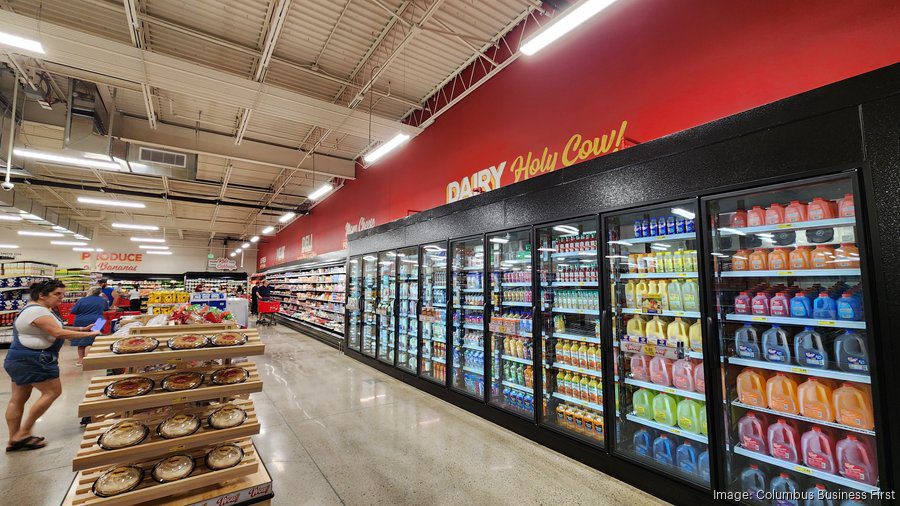
Grocery Outlet’s struggles reflect broader pressures facing discount grocers in 2026. The company’s heavy reliance on SNAP-dependent customers makes it uniquely vulnerable to federal benefit disruptions—a risk that competitors with more diversified customer bases may not face to the same degree.
The closures also highlight a classic retail expansion trap: growing store count faster than operational infrastructure and local market demand can support. Grocery Outlet’s decision to close 36 stores while simultaneously opening 30+ new ones suggests a strategic pivot toward quality over quantity—prioritizing store-level profitability over sheer footprint growth.
For shoppers, the closures mean fewer discount grocery options in certain regions, particularly on the East Coast. However, the company’s commitment to remodeling 150 stores signals that remaining locations may see improved shopping experiences in the months ahead.
Read More: Jensen Huang Net Worth: $203 Billion and NVIDIA’s AI Dominance
Frequently Asked Questions
How many Grocery Outlet stores are closing in 2026?
Grocery Outlet is closing 36 underperforming stores across six states in 2026. The closures were announced on March 4, 2026, as part of the company’s Store Optimization Plan and were completed by April 2026.
Which states are affected by the Grocery Outlet closures?
The closures affect California (9 stores), Maryland (8), New Jersey (6), Ohio (6), Pennsylvania (4), and Idaho (3). The company is not fully exiting any state.
Why is Grocery Outlet closing stores?
The company expanded too quickly, particularly on the East Coast, and faced declining sales due to disruptions in SNAP benefit disbursements that affected its core customer base. CEO Jason Potter called the closures “a direct correction” for overexpansion.
Is Grocery Outlet going out of business?
No. Grocery Outlet is closing 36 underperforming stores but plans to open more than 30 new locations in 2026 and remodel approximately 150 existing stores. The company ended Q2 2026 with 549 stores across 16 states and remains operational.
Will more Grocery Outlet stores close in the future?
The company has not announced additional closures beyond the 36 stores in the Optimization Plan. All planned closures were completed by April 2026, and the company is now focused on expansion and store remodels.
How did the store closures affect Grocery Outlet’s stock?
Following the March 5, 2026 announcement, Grocery Outlet’s stock fell 27.9% to $6.34 per share. Analysts downgraded the stock, though some later adjusted price targets upward to $10.50 as turnaround efforts showed early traction.
Conclusion
Grocery Outlet closing stores represents a significant strategic reset for the discount grocery chain. The 36 closures—concentrated in California and along the East Coast—are a direct response to overexpansion, SNAP benefit disruptions, and a $225 million net loss in fiscal 2025. While the closures eliminate a $12 million annualized EBITDA drag, the company’s long-term success will depend on whether it can execute its expansion and remodeling plans without repeating the mistakes that led to this correction. For shoppers in affected areas, the closures mean finding alternative discount grocery options, but Grocery Outlet’s remaining 549 locations and planned new openings suggest the brand is positioning itself for a more disciplined chapter.