
Introduction
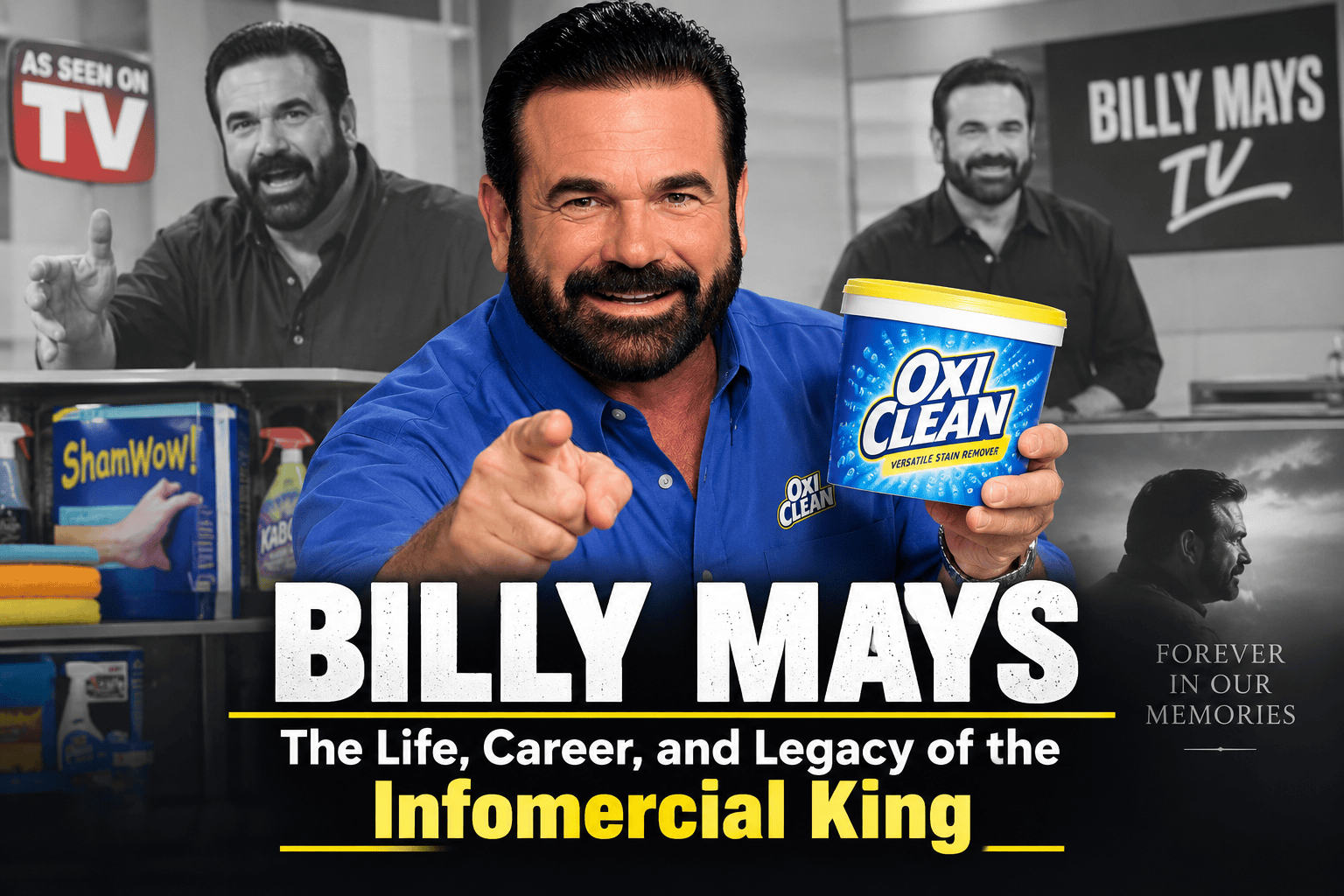
Billy Mays was an American television direct-response advertisement salesperson who became a pop-culture icon through his booming voice, signature beard, and high-energy pitches for products like OxiClean, Orange Glo, and Kaboom. Born William Darrell Mays Jr. on July 20, 1958, in McKees Rocks, Pennsylvania, he rose from selling gadgets on the Atlantic City boardwalk to becoming one of the most recognizable faces on television. His catchphrase, “Hi, Billy Mays here!”, and his enthusiastic delivery made him a household name, and his influence on the infomercial industry remains significant more than a decade after his death on June 28, 2009. This article explores his early life, career milestones, the products he championed, the circumstances of his death, and his enduring legacy.
Early Life and Career Beginnings
Billy Mays was born in McKees Rocks, Pennsylvania, a suburb of Pittsburgh, to Joyce Palm and Billy Mays Sr.. He attended West Virginia University but dropped out before completing his degree. In 1983, he began his sales career on the Atlantic City boardwalk, selling the WashMatik portable washing device alongside veteran pitchman Arnold Morris. This apprenticeship taught him the fundamentals of demonstration sales and how to captivate a live audience—skills that would later define his television career.
After graduating from high school in 1977, Mays started selling portable washing machines on the boardwalk. He traveled across the country, pitching products at state fairs, conventions, and home and garden shows. His big break came in 1993 at a Pittsburgh home show, where he met Max Appel, founder of Orange Glo cleaning products.
Rise to Infomercial Fame
In the mid-1990s, Mays was hired by Orange Glo International to appear on the Home Shopping Network to promote the company’s line of cleaners, including OxiClean, Orange Glo, and Kaboom. His first major success came with Orange Glo Wood Cleaner & Polish, followed by OxiClean, which became his signature product.
Mays’s distinctive style—wearing a blue shirt and khaki pants, speaking directly to the camera, and punctuating his pitches with “BUT WAIT, THERE’S MORE!”—became instantly recognizable to television viewers nationwide. His infomercials were known for his catchphrase “Hi, Billy Mays here” and his shouted delivery of lines.
Mays founded his own company, Mays Promotions, Inc., through which he carefully selected products to endorse. Products he pitched often saw sales increase exponentially, with OxiClean alone growing from a $4 million business in 1999 to $200 million by 2009. Forbes magazine reported that his efforts accounted for more than $1 billion in combined sales for the products he pitched.
Key Products Promoted by Billy Mays
Throughout his career, Billy Mays promoted a wide variety of products, primarily in the cleaning, home improvement, and maintenance categories. Here are some of the most notable products he championed:
| Product | Category | Description |
|---|---|---|
| OxiClean | Stain Remover | His signature product; a multipurpose stain remover and oxygen-based cleaner |
| Orange Glo | Wood Cleaner | Wood cleaner and polish for furniture and floors |
| Kaboom | Bathroom Cleaner | An “aggressive” bathroom cleaner |
| Zorbeez | Cleaning Cloth | Highly absorbent cleaning cloths |
| Mighty Putty | Adhesive | A moldable epoxy putty for repairs |
| Mighty Mendit | Fabric Adhesive | A bonding agent for fabric repairs |
| Hercules Hook | Home Improvement | A wall hanger for heavy items |
| AwesomeAuger | Garden Tool | A gardening tool for digging and planting |
| Steam Buddy | Garment Steamer | A handheld clothes steamer |
| Jupiter Jack | Mobile Accessory | A device that turns a car radio into a hands-free phone system |
His promotions aired mainly on the Home Shopping Network through his company, Mays Promotions, Inc., although they also aired on other syndicated networks.
Pitchmen: The Discovery Channel Series
In 2009, Mays partnered with the Discovery Channel to star in “Pitchmen,” a docudrama reality series that gave viewers a behind-the-scenes look at the infomercial industry. The show followed Mays and his business partner, Anthony “Sully” Sullivan, as they scoured the world for inventions they believed could make it to the big time.
“Pitchmen” premiered on April 15, 2009, and was met with generally positive reviews. The series documented the competitive direct-response marketing business, showing inventors pitching their ideas to Mays and Sullivan, who would then select products, field-test them, and film infomercials for test markets.
The show was renewed for a second season after Mays’s death, but without its star, “Pitchmen” was ultimately cancelled after two seasons.
Personal Life and Family
Billy Mays was married twice. His first marriage was to Dolores “Dee Dee” Mays, which ended in divorce. He had a son, Billy Mays III, born in August 1986, with Dolores. Mays later married Deborah Mays in 2002, and the couple welcomed a daughter, Elizabeth Mays, around 2006.
Billy Mays III has spoken publicly about his father’s life and legacy. In a 2024 interview with PEOPLE, he described his father as “beloved by the common man because that’s where he came from. He started to make it in his career when he was in his 40s. He was a hard-working dude”. Billy III worked as a production assistant on his father’s shoots and was featured on the “Pitchmen” series.
Death and Autopsy Findings
Billy Mays died on June 28, 2009, at his home in Tampa, Florida. He was 50 years old. He was found by his wife, Deborah, and police did not suspect foul play.
Initial reports suggested a possible link between his death and a rough airplane landing the day before, during which Mays said he was struck in the head. However, an autopsy performed by the Hillsborough County Medical Examiner’s office determined that Mays suffered from hypertensive heart disease and died of a heart attack in his sleep. The autopsy found no head trauma.
A subsequent autopsy report released in August 2009 stated that although Mays died from heart disease, cocaine use was a contributing cause of death. The medical examiner said Mays had last used cocaine a few days before his death but was not high when he died. The report found that “cocaine use caused or contributed to the development of heart disease,” the official cause of death.
Billy Mays Legacy and Cultural Impact
Billy Mays’s influence on the infomercial industry and pop culture is substantial. His distinctive beard, attire, loud voice, and impassioned sales pitches made him a recognized television presence in the United States and Canada. His style influenced a generation of pitchmen and changed how products were marketed on television.
Mays became a pop culture phenomenon, appearing on various television shows and becoming the subject of numerous parodies and tributes. His infomercials exist side by side with a thriving genre of Mays parodies, remixes, and outtakes on the web.
In 2024, a fan honored Mays’s memory by leaving an OxiClean bottle at his gravestone instead of flowers, a testament to his enduring association with the product he made famous. His son, Billy Mays III, continues to speak about his father’s legacy, ensuring that the “King of the Pitch” is not forgotten.
Key Facts
| Fact | Detail |
|---|---|
| Full Name | William Darrell Mays Jr. |
| Born | July 20, 1958, McKees Rocks, Pennsylvania |
| Died | June 28, 2009, Tampa, Florida (age 50) |
| Cause of Death | Heart attack; cocaine use contributed to heart disease |
| Nickname | “King of the Pitch” |
| Catchphrase | “Hi, Billy Mays here!” |
| Company | Mays Promotions, Inc. |
| Signature Product | OxiClean |
| Notable Products | Orange Glo, Kaboom, Zorbeez, Mighty Putty |
| TV Show | Pitchmen (Discovery Channel, 2009) |
| Estimated Net Worth | $2–$10 million (various sources) |
| Spouses | Dolores “Dee Dee” Mays (div.), Deborah Mays |
| Children | Billy Mays III, Elizabeth Mays |
Timeline of Billy Mays’s Life and Career
| Year | Event |
|---|---|
| 1958 | Born in McKees Rocks, Pennsylvania on July 20 |
| 1977 | Graduates from high school; begins selling on Atlantic City boardwalk |
| 1983 | Starts sales career selling WashMatik portable washing device |
| 1993 | Meets Max Appel of Orange Glo at Pittsburgh home show |
| Mid-1990s | Hired by Orange Glo International for Home Shopping Network |
| 1999 | First commercials begin airing for Orange Glo products |
| 2000 | Appears in television commercial for OxiClean; career breakthrough |
| 2002 | Marries second wife, Deborah |
| 2006 | Daughter Elizabeth is born |
| 2009 (April) | “Pitchmen” premieres on Discovery Channel |
| 2009 (June 28) | Dies at his home in Tampa, Florida |
| 2009 (August) | Autopsy report released citing cocaine as contributing factor |
| 2019-2020 | “Pitchmen” seasons found and archived by fans |
Expert Insights: The Pitchman’s Blueprint
Billy Mays had a clear philosophy for identifying products worthy of infomercial treatment. He explained his criteria in a USA Today interview: “Is it demonstratable? Does it have that wow factor? Is it easy to use? Is it priced right? It’s a funny business. I kind of compare it to baseball. I’m always looking for a home run”.
His success in the $300 billion infomercial industry was attributed to his ability to come off sincere. Unlike many pitchmen who relied on hype, Mays’s enthusiasm for the products he sold appeared genuine, which resonated with viewers. His background as a boardwalk demonstrator gave him a unique ability to connect with ordinary people—the very demographic he was selling to.
Mays also had a stake in the overall sales of many products he promoted, not just a flat fee for appearing in commercials. The Washington Post noted that top pitchmen get about $20,000 upfront for each commercial they tape, although Mays made even more money from a commission on gross revenue. This business model incentivized him to choose products carefully and pitch them effectively.
Read More: Best Day Trading Platforms 2026: Fees, Speed & Regulation Compared
Frequently Asked Questions
What was Billy Mays famous for?
Billy Mays was famous for being a television direct-response advertisement salesperson, known for his loud, enthusiastic pitches for products like OxiClean, Orange Glo, and Kaboom. His signature catchphrase was “Hi, Billy Mays here!”.
How did Billy Mays die?
Billy Mays died on June 28, 2009, at his home in Tampa, Florida, from a heart attack. An autopsy determined he suffered from hypertensive heart disease, and a subsequent report stated that cocaine use was a contributing cause of death.
What was Billy Mays’s net worth?
Estimates of Billy Mays’s net worth vary. Some sources estimated it at $10 million, while Celebrity Net Worth reported $2 million at the time of his death in 2009.
Did Billy Mays have children?
Yes, Billy Mays had two children: a son, Billy Mays III, born in 1986 with his first wife, Dolores “Dee Dee” Mays, and a daughter, Elizabeth Mays, born around 2006 with his second wife, Deborah.
What was Billy Mays’s TV show called?
Billy Mays starred in “Pitchmen,” a docudrama reality series on the Discovery Channel that premiered in April 2009. The show followed Mays and Anthony “Sully” Sullivan as they searched for new inventions to promote through direct-response marketing.
What was Billy Mays’s catchphrase?
Billy Mays was known for his signature introduction, “Hi, Billy Mays here!” which he used at the beginning of most of his infomercials. He also famously used the line “But wait, there’s more!” to punctuate his pitches.
Conclusion
Billy Mays was more than just a pitchman; he was a cultural phenomenon whose influence on direct-response marketing and television advertising endures more than a decade after his death. From his humble beginnings on the Atlantic City boardwalk to becoming the face of OxiClean and countless other products, Billy Mays built a career on sincerity, enthusiasm, and a genuine belief in the products he sold. His legacy lives on through the “Pitchmen” series, the enduring popularity of his infomercials online, and the many pitchmen he inspired. For anyone interested in sales, marketing, or pop culture history, the story of Billy Mays offers valuable lessons about the power of authenticity and the importance of connecting with your audience.