

Introduction
Sam Walton was an American retail magnate who founded Walmart and Sam’s Club, building a retail empire that would become the world’s largest corporation by revenue. Born in 1918 during an era of economic hardship, Walton’s relentless focus on low prices, operational efficiency, and treating employees as partners turned a single dime store in rural Arkansas into a global force that redefined how the world shops. His story is not just one of business success, but of a persistent belief that small towns and ordinary people deserved the same access to affordable goods as big-city consumers.
Today, Walmart operates over 10,750 stores worldwide, employs approximately 2.1 million associates, and generated $681 billion in fiscal year 2025 revenue—a testament to the foundation Walton laid. Understanding Sam Walton’s life and principles offers timeless lessons for entrepreneurs, managers, and anyone curious about how a scrappy regional discount chain became a global retail benchmark.
Early Life and the Road to Retail
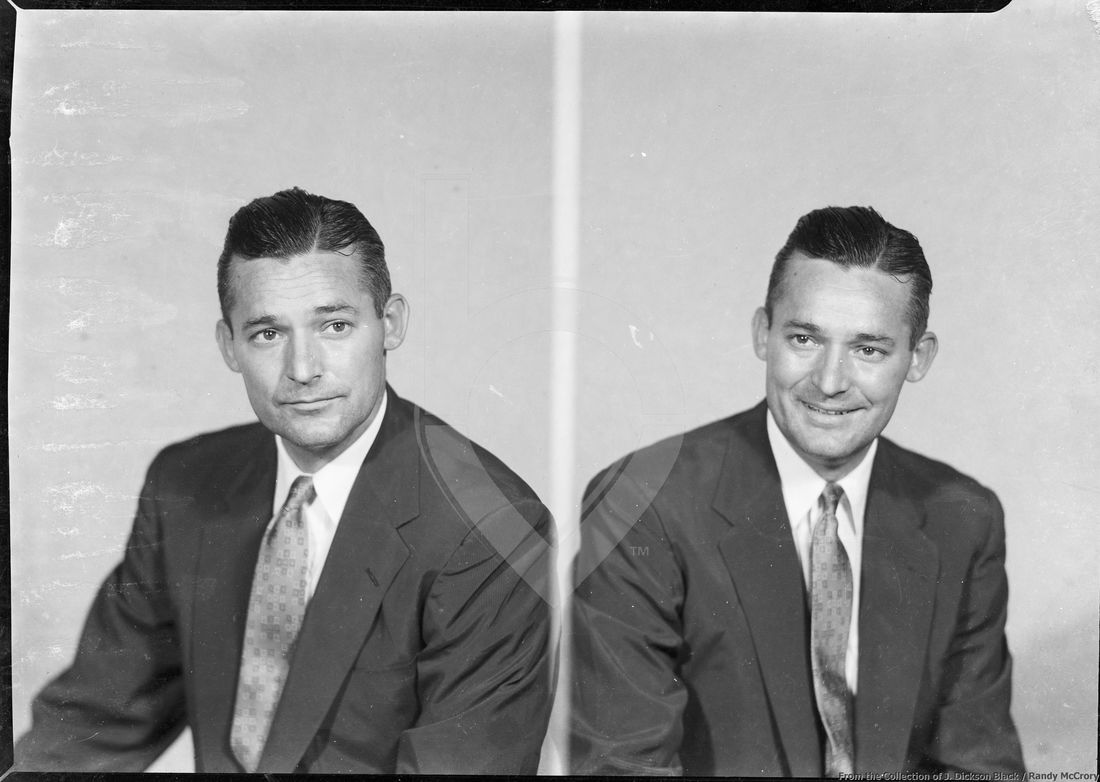
Samuel Moore Walton was born on March 29, 1918, in Kingfisher, Oklahoma, and grew up during the Great Depression, an experience that instilled in him a deep appreciation for hard work and frugality. He graduated from the University of Missouri in 1940 with a degree in economics and immediately entered a management training program at J.C. Penney in Des Moines, Iowa. After serving in the U.S. Army Intelligence Corps during World War II, Walton used a $25,000 loan from his father-in-law to open his first Ben Franklin variety store in Newport, Arkansas, in 1945.
A critical early lesson came when his landlord refused to renew the lease, forcing Walton to sell the store. He later described the experience as a formative business education in the importance of lease terms and controlling one’s own destiny. Undeterred, he relocated to Bentonville, Arkansas, in 1950 and opened Walton’s 5&10 on the downtown square—the town that would remain his home and Walmart’s headquarters for decades. By the early 1960s, Walton and his brother James “Bud” Walton operated a regional chain of 15 Ben Franklin franchises, but Walton’s vision extended beyond the traditional variety-store model.
The Founding of Walmart: A Bet on Small-Town America
In 1962, at the age of 44, Sam Walton opened the first Walmart store—Wal-Mart Discount City—in Rogers, Arkansas. The idea was simple yet radical for its time: offer a wide variety of name-brand merchandise at discount prices in a no-frills, self-service setting, and do it in small towns that larger chains had overlooked. When Ben Franklin executives rejected his concept for a big-box discount chain in rural areas, Walton decided to build it himself.
His model relied on two interlocking advantages. First, by locating stores in towns with limited existing competition, Walmart could capture a loyal customer base without engaging in costly urban retail battles. Second, Walton built a logistics network that placed regional clusters of stores within a day’s drive of a central warehouse, enabling volume buying and efficient distribution through the company’s own trucking fleet. This combination of low costs and broad selection allowed Walmart to undercut local competitors and scale rapidly. By 1977, the chain had 190 stores; by 1985, it had 800.
Sam Walton’s Business Philosophy: The 10 Rules and Everyday Low Prices
Sam Walton’s approach to business was codified in his “10 Rules for Building a Better Business,” which remain central to Walmart’s corporate culture and are prominently displayed at the Walmart Museum in Bentonville. These rules reflect a philosophy that prioritized commitment, partnership, communication, and relentless cost control.
| Sam Walton’s 10 Rules for Building a Better Business | Core Principle |
|---|---|
| 1. Commit to your business | Believe in it more than anyone else |
| 2. Share your profits with associates | Treat them as partners |
| 3. Motivate your partners | Money and ownership alone are not enough |
| 4. Communicate everything possible | Information builds trust |
| 5. Appreciate everything associates do | Recognition drives loyalty |
| 6. Celebrate your successes | Find humor in failures |
| 7. Listen to everyone in your company | Ideas can come from anyone |
| 8. Exceed customer expectations | Give them reasons to return |
| 9. Control expenses better than competitors | Operational efficiency is a competitive weapon |
| 10. Swim upstream | Ignore conventional wisdom and challenge the status quo |
Underpinning these rules was Walton’s commitment to “Everyday Low Prices” (EDLP), a strategy that rejected temporary promotions in favor of consistently low shelf prices enabled by relentless cost discipline. He also launched the “Made in America” initiative in the mid-1980s, pledging to buy more U.S.-manufactured goods when they could be priced competitively—a move that resonated with customers and underscored his belief that business could serve both consumers and communities. Walton’s hands-on management style, which included early-morning store visits and piloting his own plane to scout new locations, reinforced a culture of frugality and customer focus that outlasted his tenure.
Growth, Global Expansion, and the Walmart Effect
Walmart went public in 1970, using the proceeds to finance steady expansion. The company introduced Sam’s Club, a warehouse wholesale format, in 1983, and began opening Supercenters—combining general merchandise with full grocery—in 1988. By 1990, Walmart had surpassed Sears, Roebuck and Company to become the largest retailer in the United States. International expansion began in 1991 with a store in Mexico City, and growth continued through new store openings and acquisitions in markets around the world.
Walmart’s scale has had profound economic effects, often referred to as the “Walmart Effect”—a term used to describe the company’s influence on local economies, suppliers, competitors, and labor markets. While the company has been praised for lowering prices for consumers and driving efficiency in supply chains, it has also faced criticism over labor practices and its impact on small businesses. Sam Walton’s legacy is inseparable from this complex dual impact: he democratized access to affordable goods for millions of rural and working-class Americans, while simultaneously ushering in an era of retail consolidation that reshaped communities across the country.
Key Facts and Timeline
| Key Fact | Detail |
|---|---|
| Full name | Samuel Moore Walton |
| Born | March 29, 1918, Kingfisher, Oklahoma, U.S. |
| Died | April 5, 1992, Little Rock, Arkansas (aged 74) |
| First Walmart opened | July 2, 1962, Rogers, Arkansas |
| Walmart went public | 1970 |
| Sam’s Club founded | 1983 |
| Walmart became largest U.S. retailer | 1990 (surpassed Sears) |
| Presidential Medal of Freedom | Awarded 1992 by President George H. W. Bush |
| Estimated net worth at death | Approximately $23 billion to $28 billion |
| Walmart FY2025 revenue | $681 billion |
| Walmart global associates | Approximately 2.1 million |
| Walmart stores worldwide | More than 10,750 |
| Year | Milestone |
|---|---|
| 1918 | Born in Kingfisher, Oklahoma |
| 1940 | Graduates from University of Missouri with a degree in economics |
| 1945 | Opens first Ben Franklin variety store in Newport, Arkansas |
| 1950 | Relocates to Bentonville, Arkansas; opens Walton’s 5&10 |
| 1962 | Opens first Walmart in Rogers, Arkansas |
| 1970 | Walmart goes public |
| 1983 | Founds Sam’s Club |
| 1988 | Opens first Walmart Supercenter |
| 1990 | Walmart becomes largest U.S. retailer |
| 1991 | First international store opens in Mexico City |
| 1992 | Sam Walton dies; awarded Presidential Medal of Freedom |
Legacy and the Walton Family Fortune
Sam Walton died on April 5, 1992, shortly after receiving the Presidential Medal of Freedom. At the time of his death, his fortune was estimated at between $23 billion and $28 billion, and Walmart had achieved net sales of $43.9 billion with 1,720 stores. His ownership stake passed to his wife, Helen, and their four children—Rob, John, Jim, and Alice—in accordance with his wishes.
Today, the Walton family remains one of the wealthiest families in the world, with a nearly 39% stake in Walmart held through holding companies. Alice Walton, Sam and Helen’s only daughter, has seen her net worth approach $120 billion, driven largely by the appreciation of Walmart stock and her philanthropic ventures, including a tuition-free medical school. Rob Walton, the eldest son, led the family’s involvement in Walmart for decades and later became owner of the Denver Broncos. The family’s combined wealth, estimated in the hundreds of billions, is a direct reflection of the enduring value of the company Sam Walton built.
Beyond financial wealth, Sam Walton’s legacy lives on in Walmart’s corporate purpose: “saving people money so they can live better,” a phrase he articulated during his Medal of Freedom acceptance remarks. The company’s continued emphasis on low prices, supply chain innovation, and associate partnership—however contested by critics—bears the imprint of its founder’s core beliefs. Walton’s autobiography, Sam Walton: Made in America, remains a widely read account of his life and principles, and his 10 rules continue to be cited by business leaders and management scholars.
Expert Insights
From a strategic management perspective, Sam Walton’s most enduring contribution was his recognition that logistics and cost control could be as powerful a competitive advantage as product innovation or brand marketing. By building Walmart’s distribution network around regional clusters and its own trucking fleet, he created a structural cost advantage that competitors struggled to replicate. His decision to locate in small towns, initially born of necessity, became a deliberate strategy to avoid head-to-head competition and dominate underserved markets.
Walton’s emphasis on sharing profits and information with associates was also ahead of its time. In an era when retail workers were often treated as interchangeable, he framed them as partners and introduced incentives such as shrinkage bonuses that aligned employee interests with company performance. While Walmart’s labor practices remain a subject of debate, the principle that frontline workers should have a stake in operational success has influenced modern retail management. For contemporary entrepreneurs, the lesson is clear: sustainable scale is built not only on low prices, but on a culture that treats cost discipline and human capital as mutually reinforcing priorities.
Read More: Jeff Bezos Yacht: Inside the $500 Million Koru and Its Support Vessel
Frequently Asked Questions
What was Sam Walton’s net worth when he died?
Estimates vary, but at the time of his death in 1992, Sam Walton’s fortune was commonly reported at approximately $23 billion to $28 billion, making him one of the wealthiest individuals in the United States.
When and where did Sam Walton open the first Walmart?
Sam Walton opened the first Walmart on July 2, 1962, in Rogers, Arkansas, at the age of 44.
What are Sam Walton’s 10 rules for building a business?
The rules include commitments to the business, sharing profits with associates, motivating partners, communicating openly, appreciating employees, celebrating successes, listening to everyone, exceeding customer expectations, controlling expenses, and “swimming upstream” by challenging convention.
How did Sam Walton become successful in retail?
Sam Walton succeeded by focusing on small-town markets that larger chains ignored, building an efficient regional warehouse and trucking network, buying in volume to offer Everyday Low Prices, and treating employees as partners in the business.
What was Sam Walton’s “Made in America” initiative?
In the mid-1980s, Walton launched a campaign to source more goods manufactured in the United States, pledging that Walmart would buy American-made products when they could be priced competitively, reflecting his belief that business should support domestic communities.
Who inherited Sam Walton’s Walmart fortune?
Walton’s ownership stake passed to his wife, Helen, and their four children—Rob, John, Jim, and Alice. The family’s descendants remain major shareholders, with a combined stake of nearly 39% in Walmart.
Conclusion
Sam Walton‘s journey from a Depression-era farm boy to the founder of the world’s largest retailer is a case study in the power of a clear, customer-centric vision executed with relentless discipline. He built Walmart on the conviction that low prices and small-town markets were not limitations but opportunities, and he codified that conviction in principles—from Everyday Low Prices to the 10 rules—that continue to shape the company decades after his death.
While the Walmart Effect remains a subject of legitimate debate, Sam Walton’s influence on retail logistics, discount strategy, and employee partnership is undeniable. For anyone seeking to understand how a business can scale without losing its operational soul, the life and lessons of Sam Walton offer a durable and instructive blueprint.